
Peptide Stacks, Blends and Starter Kits
One heading covers three quite different things. Each arrives in the box differently, and each comes with different paperwork.
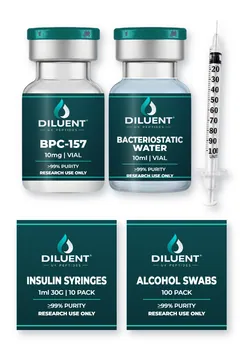 BPC-157 Starter Kit
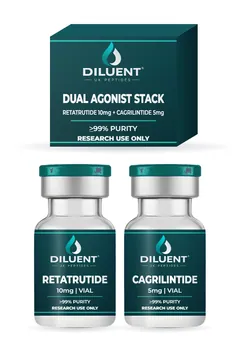 Dual Agonist Stack
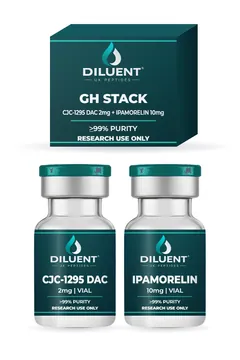 GH Stack
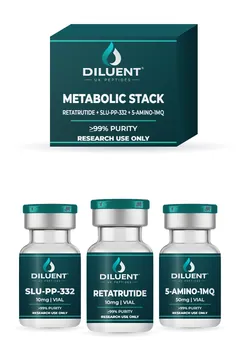 Metabolic Stack
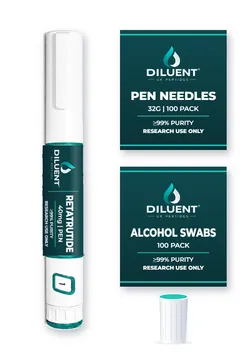 Pen Starter Kit
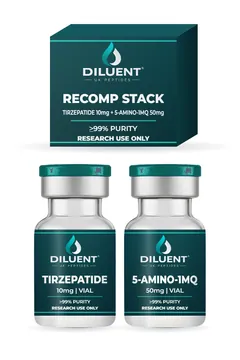 Recomp Stack
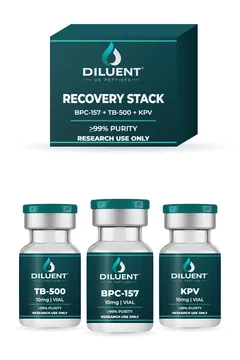 Recovery Stack
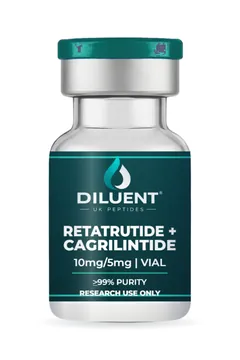 Retatrutide + Cagrilintide Blend
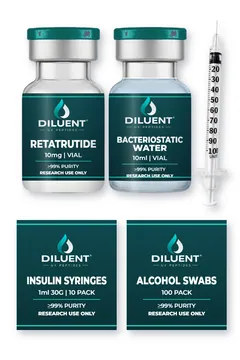 Retatrutide Starter Kit
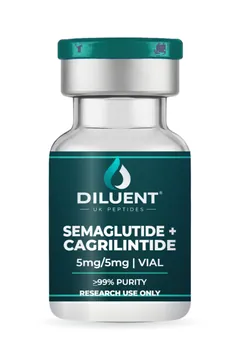 Semaglutide + Cagrilintide Blend
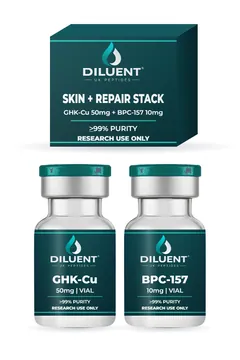 Skin + Repair Stack
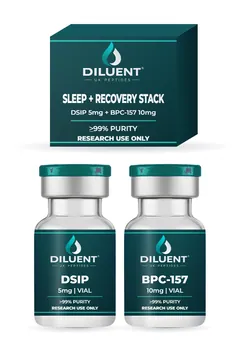 Sleep + Recovery Stack
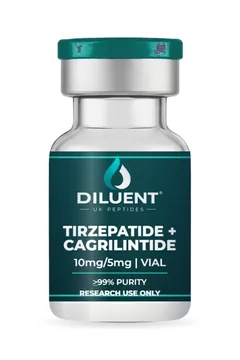 Tirzepatide + Cagrilintide Blend
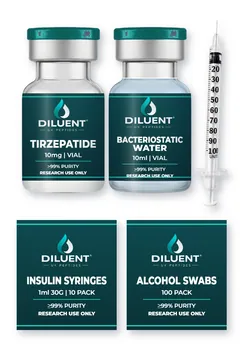 Tirzepatide Starter Kit
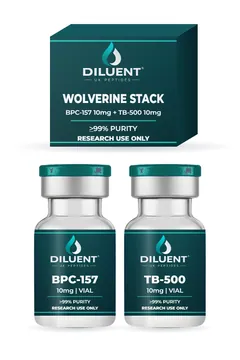 Wolverine Stack
About Peptide Stacks, Blends and Starter Kits
What is a peptide blend?
A blend puts several compounds into one vial, mixed together before the freeze-drying step. That gives you a single vial, a single label naming all of its contents, and a single certificate of analysis written for the mixture.
Combined means committed: once mixed there is no pulling a blend apart again. One reconstitution takes the lot into solution at the ratio the label gives. In this range the blends are GLOW, KLOW and the three cagrilintide pairings.
What is a peptide stack?
A stack is simply several vials boxed together, with nothing mixed. Label, batch number and certificate are all per vial, and each gets made up separately.
Which matters in practice: a stack comes apart, a blend does not. Swap one component out, or use the vials weeks apart, and only a stack will let you. The Wolverine, Recovery and Metabolic sets are all stacks, along with the others.
What is a starter kit?
A kit pairs a single compound with the equipment to make it up: bacteriostatic water, insulin syringes and alcohol swabs, or pen needles where the kit is built round a pen. That vial is the very one from its own page, unchanged. All the kit does is turn a first order into one checkout rather than three.
What is the difference between a stack, a blend and a kit?
| Stack | Blend | Kit | |
|---|---|---|---|
| Vials in the box | Several | One | One |
| Components combined? | No | Yes, before freeze-drying | No |
| Labels | One per vial | One, listing every component | One, on the vial |
| Certificates | One per vial | One, for the mixture | One, for the vial |
| Can be separated? | Yes | No | Not applicable |
| Consumables included? | No | No | Yes |
| Reconstitution | Each vial separately | Once, for the whole vial | Once, water included |
Why buy a blend instead of the individual compounds?
Three of them, and not one is pharmacological. They are all logistics.
- A single vial rather than several. One reconstitution, one thing in the fridge, one thing to remember.
- Fewer vials, less packing, one postage. That is the entire reason a blend undercuts the sum of its parts. Nothing has been discounted on the compounds themselves.
- A ratio you cannot get wrong. Proportions are fixed at the point the blend is made, so every millilitre drawn carries the same mix.
The case for buying separately is one word: control. Individual vials can go to different concentrations, be used weeks apart, or be bought one at a time as you need them. Nothing on this shelf locks you in, because every component of every blend and stack is also sold alone, and each product page prints what its contents cost separately next to the price of the box.
Why buy a stack instead of the individual compounds?
Identical vials either way. What a stack changes is the packaging and the price: the same material, boxed together, costing less than three separate purchases. Only want two of the three? Buy those two. Nothing about the vials changes.
What does the milligram figure on a blend label mean?
Read it as the total across every component in the vial, never as the strength of a single one. So an 80mg blend of four compounds contains 80mg altogether, split four ways. And a 50mg blend of three is not a weaker product; it simply holds less in total, divided up differently.
Of everything printed on our labels, this is the number people get wrong most often. The breakdown for each blend sits on its own product page, and reading a vial label goes through every other line.
Which blend do I have?
Look at the label: ours name every component on the compound line. If what you are holding does not list its contents, it did not come from us, and we have no way of telling you what is in it.
| Blend | Components |
|---|---|
| GLOW | GHK-Cu + BPC-157 + thymosin beta-4 fragment |
| KLOW | GLOW's three, plus KPV |
| Retatrutide + Cagrilintide | Retatrutide + cagrilintide |
| Tirzepatide + Cagrilintide | Tirzepatide + cagrilintide |
| Semaglutide + Cagrilintide | Semaglutide + cagrilintide |
| CJC-1295 + Ipamorelin | CJC-1295 no DAC + ipamorelin |
| Wolverine (blend format) | BPC-157 + TB-500 |
KLOW takes its K from the KPV, and that one ingredient is the only thing separating it from GLOW.
How do I store a blend or a stack?
| State | Blend (one vial) | Stack (several vials) |
|---|---|---|
| Sealed, as powder | Cool, dry, out of direct light. A freezer suits long holding. | |
| Once reconstituted | Refrigerated, upright, not frozen | Each vial separately, same conditions |
| Light | Out of direct light throughout | |
| Shelf life | Not published, the label and that batch's certificate are the authority | |
Make up a whole stack in one go and you have several open solutions running at once. If you are only using a single component, there is no reason to make the rest up at all.
Is there any research on these combinations?
Not one published study looks at any of these pairings as a pairing. The evidence that exists sits with the individual compounds, linked from each of their own pages, and none of it covers what happens when they are supplied side by side.
Nothing on this shelf, then, rests on research into the combination. If someone tells you what a given blend contributes, they are not quoting a paper.
How are these priced?
The contents decide it. Add up the vials in a stack and take a discount off; a blend goes further still, because one vial costs less to fill and send than several. Each product page prints the separate cost of the components next to the box price, so you can see the saving rather than take our word for it.
Stacks, Blends & Kits questions
What is the difference between a stack and a blend?
Count the vials. A stack gives you several, each with its own label and its own batch to trace, and you can split the set up. A blend gives you one, its contents combined before freeze-drying and covered by a single certificate, and there is no separating it again.
Why would I buy a blend instead of the separate compounds?
Three practical reasons: one reconstitution and one vial in the fridge rather than several, a ratio fixed in every millilitre you draw, and a lower price that comes from fewer vials, less packing and one postage. Go separate if you want each concentration under your own control.
Does an 80mg blend mean 80mg of one compound?
It does not. Everything in the vial is added together to give that number, and the split between components is on the product page.
How do I know which blend I have?
Check the label, which lists every component. All of our blends name their contents both there and on the product page.
How should I store a blend?
While it is still sealed powder, somewhere cool, dry and dark, with the freezer best for anything long term. After mixing, the fridge, standing upright, and never the freezer.
What comes in a starter kit?
A vial, bacteriostatic water, syringes and alcohol swabs. Where the kit is built around a pen, pen needles instead. The vial is exactly the one from its own page.
Is there research on the combinations?
None at all on the combinations themselves. What evidence exists belongs to the separate ingredients, each linked from its own page.